Non-Economic Damages
Personal Injury Legal Damages
The aftermath of a catastrophic injury changes a person's life forever, and many of the long-term effects of a personal injury extend far beyond mere medical bills and lost wages. Sadly, victims who have been hurt due to another person's negligence often endure emotional distress and suffering that can be just as debilitating as a physical impairment.

Have You Been Injured in an Accident?
Call a Personal Injury Lawyer Today!
(888) 987-0005
Family members of a person suffering a wrongful death due to another’s negligent conduct not only suffer from the economic loss of their family member, but also from mental anguish, loss of the companionship of their parent, child or spouse and loss of a loving relationship.
Texas law recognizes these challenges and the right of personal injury victims and wrongful death surviving family members who have suffered physical or emotional harm to recover compensation for the full extent of their losses. If you can prove that another party caused your injuries or loss, that party can be held legally liable for both economic and non-economic damages.
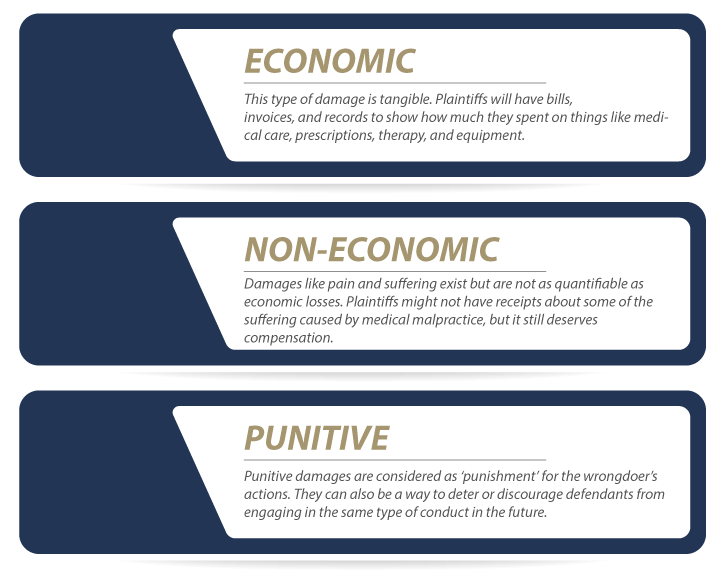
Economic damages are designed to compensate victims for quantifiable losses such as medical expenses and lost wages. Non-economic damages are awarded to compensate victims for the intangible and subjective repercussions of the accident, like physical pain, emotional suffering, and an overall loss of quality of life in personal injury cases and mental anguish, loss of companionship and familial relationship in wrongful death cases.
Victims of car accident, trucking accidents, premises liability, construction and workplace accidents, and defective product accidents are the primary claimants for non-economic damages. No two cases are alike, and determining the amount of non-economic damages you may be available in your case can be challenging.
Consulting with a knowledgeable personal injury attorney who can thoroughly evaluate the specifics of your case is essential to understanding the full scope of damages you may be entitled to.
At Miller Weisbrod Olesky, our team of seasoned personal injury lawyers has the skills and resources to determine how much your case may be worth and increase your chances of receiving a fair settlement. Schedule a free consultation with a member of our team if you have questions about whether you may be eligible to receive compensation for your losses.
Our client suffered a broken ankle during a balcony collapse at her apartment complex. A contractor was hired to replace rotting balconies within the complex. They failed to provide adequate support on the hew design structure of the balconies being constructed. Months later the balcony collapsed fracturing our client's ankle resulting in surgery. When the insurance company failed to pay their required limits, Attorney Clay Miller took the case to trial and won a verdict above the insurance limits that they paid in full.

What are Non-Economic Damages in a Personal Injury Case?
Damages in Texas personal injury cases are intended to reimburse or compensate the injured victim or surviving members (plaintiff) for losses and harm they've sustained because of another party's wrongful acts. In personal injury and wrongful death cases, these damages can be divided into three categories: economic, non-economic, and punitive.
Economic or special damages are intended to compensate a victim for the direct costs associated with the injury, such as medical bills, lost time from work, and loss of earning capacity. Non-economic or general damages seek to compensate victims for non-monetary losses like the physical suffering impairment and the mental anguish they've endured after suffering an injury and similar emotional losses in a wrongful death case.

Unlike economic damages, which cover calculable losses, these damages can't be easily quantified and are more difficult to prove and estimate. Lawyers often rely on expert testimony, such as that from a psychologist or medical professional, to provide evidence of the extent of the victim's suffering and the impact the accident has had on their quality of life.
Unlike compensatory damages (economic and non-economic), exemplary or punitive damages are only available in certain circumstances where the wrongdoer's (defendant's) conduct is considered intentional or gross negligence. These damages are intended to punish the defendant for their actions and deter others from engaging in similar behavior.
Juries typically have the discretion to determine the value of such losses. Many people believe there is a standard formula required to be used in non-economic damages, but that is not the case. As long as the award is not unreasonable or arbitrary, the final determining body of the amount of damages for a given loss is a jury in a jury trial case or a judge in a trial before a judge.
Personal injury attorneys use their past jury trial experience and knowledge of similar cases to determine a settlement value for a personal injury or wrongful death case prior to trial.
What Types of Personal Injury Cases Might Involve Non-Economic Damages?
Personal injury law is based on the idea that individuals who suffer harm due to another's negligence or intentional acts have the right to recover compensation for their losses. You can recover compensation for non-economic damages in all types of personal injury and wrongful death cases.
Examples of cases where you can claim damages for pain and suffering include:
- Medical malpractice
- Car accidents
- Truck accidents
- Construction site accidents
- Motorcycle accidents
- Product liability claims
- Premises liability claims
- Workplace accidents
It is not uncommon for the insurance company to try and convince you that you are not entitled to pursue compensation for your pain and suffering, physical impairment/disability, and mental anguish.

They may do this by downplaying the severity of your injuries or arguing that the emotional distress and physical impairment you've suffered is not enough to warrant seeking compensation for non-economic damages. Before you accept any offer or agree to a settlement, consult with an experienced personal injury lawyer who can confirm the damages you may be eligible to recover and ensure you receive compensation for the full value of those damages.
Common Types of Non-Economic Damages
Although non-economic damages do not have specific mathematical formula and are more difficult to calculate, they are every bit as important to a personal injury claim as economic damages.
In fact, in some cases involving catastrophic personal injuries or wrongful death, non-economic damages can be a significant source of compensation, far exceeding the award a victim receives for economic damages. A skilled personal injury attorney can ensure the full extent of your emotional struggles are recognized and valued appropriately.

An accident or injury victim may seek compensation for a variety of non-economic damages, including:
- Physical pain and suffering: This refers to the physical pain and emotional suffering the victim experienced due to the accident. Common injuries that result in physical pain and emotional anguish include traumatic brain injuries (TBIs), spinal cord injuries, paralysis, and injuries to internal organs. For example, a consumer who experiences nerve damage due to a defect in a household product can seek compensation for the impact the ongoing pain has on their daily life.
Damages for pain and suffering include compensation for the immediate pain from the injury as well as any potential ongoing pain the victim might endure in the future, such as chronic discomfort or reduced mobility.
In determining the amount of compensation that should be awarded, the severity and duration of the victim's pain will be considered. Proving pain and suffering often involves your lawyer gathering evidence like medical bills, prescriptions for pain medication, photographic documentation of the injury, and testimony from family and friends. - Mental anguish and emotional distress: Damages for emotional distress and mental anguish are awarded for the psychological impact of the incident. This encompasses a range of conditions such as depression, anxiety, insomnia, panic attacks, frustration, anger, and even more severe mental health issues like post-traumatic stress disorder (PTSD).
PTSD is one of the most common examples of mental anguish victims suffer after an accident. For example, an individual involved in a serious car accident may fear a recurrence of the event and be afraid to get behind the wheel again.
Substantiating this type of damage claim involves providing evidence such as reports from a psychologist that detail the impact of the accident on the victim's mental health or a chronological account recorded in a journal that document's the victim's emotional response to the accident. - Loss of consortium/companionship: When a person is seriously injured or killed, it can drastically affect their relationship with their loved ones. Loss of consortium damages are intended to compensate the spouse, parent, or child of an accident victim for the negative effects they've suffered due to their loved one's injury.
For example, a wife can file a loss of consortium claim against a negligent driver for causing an accident that resulted in her husband sustaining physical injuries that make it difficult for him to be the loving husband he once was.
An eligible family member or spouse of the injured party can sue for damages such as loss of love, affection, companionship, emotional support, shared household responsibilities, and sexual relations. Loss of companionship is typically claimed in wrongful death cases. However, it may also be applicable in cases where a severe injury has led to a significant change in the marital or family dynamic. - Permanent impairments, disfigurement, and disability: Some personal injuries have lifelong consequences, and accident victims deserve to be compensated for the ongoing challenges and diminished quality of life they will have to endure. Unlike the other categories, disfigurement and scars can be observed.
Impairment refers to limitations on the ability to live everyday life with the enjoyment that existed prior to the accident. The injured victim may recover damages for physical impairment and disability if they can prove that they can no longer participate in activities or enjoy life as they did before the accident.
For example, a person may not only have disfiguring scars but be unable to use body parts in the same manner after sustaining life-altering burn injuries in a workplace accident. Common examples of disfigurement include scars from burns, limb loss, or other alterations that affect an individual's appearance. - Loss of enjoyment/diminished quality of life: Sustaining an injury after an accident caused by someone else's negligence can significantly impact the victim's quality of life. The resulting emotional distress from being involved in an accident can prevent the victim from playing sports, engaging in hobbies, and participating in other activities they used to love.
For example, an avid cyclist who suffers a back injury in a car accident may be unable to participate in the sport they love, resulting in a significant loss of their personal identity. Some examples of injuries that are most likely to warrant a loss of enjoyment claim are brain, spinal cord, and facial injuries.
Your lawyer will reference medical records, obtain statements from friends and family, and expert opinions to prove how your injury has affected your quality of life.
In a personal injury claim, non-economic damages play a crucial role in ensuring that accident victims are fairly compensated for the profound and lasting effects that extend beyond quantifiable financial losses.
A knowledgeable personal injury lawyer can aid in your emotional and psychological recovery by ensuring that the full scope of your losses is recognized and accurately valued.
How Can You Prove Non-Economic Damages?
Non-economic damages are more challenging to prove than economic losses due to the difficulty in demonstrating and quantifying the emotional and psychological impact an injury has on an accident victim's life. However, it is possible to prove your claim for non-economic damages with the right evidence.

Here are some examples of evidence you can use to support your claim for non-economic damages:
- Document your injuries in a pain journal: Keep a journal that details how the injury affects your daily life. Track your pain symptoms, emotional states, and the specific activities you've missed due to the injury.
- Provide medical evidence: Keep copies of medical records, receipts that show you have purchased pain medication, and evaluations from psychologists that detail the extent of your injury as well as the impact the accident has had on your emotional and mental health. Notes from healthcare providers regarding your pain level or counseling notes can help substantiate your claims of physical pain and emotional trauma.
- Gather witness statements: Collect statements or testimonies from people like family, friends, or coworkers who can attest to the impact of the injury on your life, mood, and behavior. Having someone close to you testify about how much your life has changed since the accident can be used as valuable evidence to further validate claims of non-economic harm, such as diminished quality of life.
- Photographs and videos: Photos that show the extent of your injuries or videos showing how your mental state has been affected by your injuries can serve as strong evidence of the impact of the accident on your daily life. This visual evidence can help illustrate the ongoing challenges you face and be used to support testimonies from medical professionals and expert witnesses.
- Expert testimony: Expert witnesses, such as psychologists and psychiatrists, can provide their professional opinion on the cause and severity of the victim’s injuries. Their testimony is crucial in demonstrating the full scope of the victim's suffering and its effect on their overall well-being.
A personal injury lawyer can be instrumental in ensuring that all relevant evidence is thoroughly collected, documented, and preserved. They can also guide you on the best practices for maintaining a detailed pain journal, arrange expert testimonies from medical professionals, and advocate for your best interests during negotiations or in court. With a seasoned attorney by your side, you can confidently pursue the justice you deserve.
Calculating the Value of Non-Economic Damages in a Personal Injury Case
Putting a price on pain in suffering is challenging, as each individual's situation and experiences are unique and highly subjective. Unlike economic damages, non-economic damages lack tangible evidence, such as receipts, invoices, or bills, to substantiate their value. Because there is no standard formula or statutory guidelines for calculating pain and suffering damages, several factors are used to determine how much your pain and suffering damages are worth.
Some examples of factors that can affect the potential value of non-economic damages you receive include:
- The type, severity, or extent of the injury
- The duration of your recovery
- Whether you've sustained a permanent impairment or disability
- Having significant scarring or disfigurement
- The type of medical treatment and rehabilitative therapy you require
- The impact the injury has had on the quality of your life
- The nature of your occupation and your age
While there is no set formula to determine the value of these losses, there are two common methods used to get a figure for non-economic damages. The first is the per-Diem formula, which assigns a specific monetary value to the pain and suffering the victim has experienced after the accident.
This value is then multiplied by the number of days the victim's condition persists. For example, if the per-Diem amount is $80 and the injured person suffered for 300 days, the non-economic damage award would total $24,000. If the loss is for life obviously the number of days would be much larger.
The second is the multiplier method, which involves taking the total of your economic damages and multiplying that figure by a multiplier. This number is assigned based on the severity of your injury, the extent of your pain and suffering, and the impact the injury has had on your quality of life.
More severe cases involving traumatic brain damage or spinal cord injuries often receive a higher multiplier than cases involving broken bones. In a personal injury case, determining how much money should be awarded for non-economic damages requires carefully looking at the specific details of each case and understanding the impact an accident has had on the victim's life.

Neither of these methods are required or mandated but are often used by personal injury attorneys and even juries in attempting to determine the fair and reasonable value of non-economic losses. Unfortunately, many people are unaware of the damages they're entitled to and how much they are worth, allowing insurance companies to take advantage of their lack of knowledge. A skilled personal injury attorney can navigate accident victims through the process of documenting and calculating their losses, ensuring that all damages are appropriately accounted for and considered.
Non-Economic Damage Caps in Texas Personal Injury Cases
Unlike other states, there are no statutory limits on the amount that can be awarded for non-economic damages in a Texas personal injury case. However, there is a damage cap for cases involving medical malpractice or a government entity.
In a medical malpractice claim, the victims can sue a doctor or other healthcare professional for no more than $250,000 and seek an additional $250,000 from each healthcare facility, like hospitals and clinics. If multiple facilities are involved in the incident, the maximum amount a person can receive for non-economic damages from those facilities is limited to $500,000. Thus, a person can receive no more than $750,000 in non-economic damages in a medical malpractice case.
Claims involving government entities (state, municipality, EMS, police, etc.) are capped at $250,000 for each person involved in the accident but cannot exceed more than $500,000 for a single occurrence.
For example, if a police officer is found to be responsible for an accident that causes four people to sustain serious injuries, the maximum amount of $500,000 will be split evenly among each individual ($125,000/person). Some governmental entities (like counties) have even lower limits of $100,000 per person.
Consult with an experienced injury attorney who can calculate a fair value for your damages and work to ensure your rights and best interests are protected throughout the process.
Proving Negligence in a Personal Injury Case
Victims of negligence in Texas can seek compensation for both economic and non-economic damages by filing a lawsuit against the person responsible for their injuries and other losses. However, to have a successful claim, the victim must gather evidence to prove the following four elements of negligence.
- Duty: The defendant (at-fault party) owed the plaintiff a duty to act with reasonable care. For example, a manufacturer owes a duty of care to consumers to ensure their products are safe.
- Breach: The defendant breached this duty by failing to meet the expected standard of care in the given situation. For example, if a surgeon operates on the wrong limb due to inadequate preparation, this error may constitute a breach of their duty of care.
- Causation: The defendant's failure to exercise reasonable care was the direct and proximate cause of the plaintiff's injury.
- Damages: The plaintiff must demonstrate that they suffered actual damages, such as medical expenses, lost wages, or pain and suffering as a result of the defendant's negligence.
If you believe your injury resulted from another's negligence, you shouldn't attempt to navigate your case alone. Instead, you should consult a skilled personal injury attorney who can provide you with expert guidance and representation while you focus on your recovery.
Personal Injury Statute of Limitations
Texas Civil Practice and Remedies Code § 16.003

In Texas, there is a two-year statute of limitations for filing most personal injury lawsuits, including claims for pain and suffering damages. In some cases, there are exceptions to the statute of limitations, which is why it is essential to speak with an attorney as soon as possible after an injury.
Failing to file a lawsuit before the deadline expires could result in you losing your legal right to pursue compensation for your accident-related injuries and losses.
Our Personal Injury Lawyers Help You Claim Legal Damages
Non-economic damages in a personal injury case offer victims of negligence a path for gaining compensation for non-monetary losses like pain and suffering. While challenging to quantify, these damages can be a significant source of compensation and play a vital role in providing relief to the injured party as they adapt to their new circumstances.
Navigating the aftermath of a personal injury on your own can be overwhelming. A personal injury lawyer with extensive experience and a deep understanding of the legal complexities involved in these cases can make all the difference in your journey toward healing.
The dedicated personal injury lawyers at Miller Weisbrod Olesky know the ins and outs of the evidence necessary to prove non-economic damages and are ready to help you recover full and fair compensation for your losses.
We operate on a contingency fee basis, meaning you won't owe us a dime unless/until we win your case. Call us at 888-987-0005 or use our online contact form to schedule your free, no-obligation case review today.

Miller Weisbrod Olesky
Miller Weisbrod Olesky's Personal Injury Lawyers help individuals and families nationwide pursue real financial recovery after another's negligence causes an accident or medical mistake that results in serious personal injury or wrongful death.
Call our offices today at (888) 987-0005 for experienced assistance in a free consultation.
Useful Links
Testimonials
- Ms. Rosen: Mr. Weisbrod did a wonderful job on my son's case. I only wished that I had come to him sooner.
- A. Springs: Mr. Weisbrod was a delight to work with. His knowledge and memory was exceptional. He treated my case with sensitivity and care and I was always confident and never doubtful that he would win my case.
- D. Garcia: Whether you're in Dallas, Houston, or Austin, across Texas or around the nation, putting Miller Weisbrod on your legal team will push parties to settle.
Locations
★ Dallas
11551 Forest Central Drive, Suite 300
Dallas, TX 75243
★ Houston
12929 Gulf Freeway, Ste 111
Houston, TX 77034