Burn Injury Attorneys
Catastrophic Burn Injuries
Burn injuries are among the most painful of injuries and can take a long time for recuperation and rehabilitation. Although a burn injury can be non-life-threatening, depending on the severity of the injury, the damage caused by the burn accident can be permanent and require years for recovery. Unfortunately, not everyone involved in a burn accident, which includes chemical burns and electrical burns, survives.

Severe electrical burns can be a devastating lifelong injury, or extremely fatal. Even a nonfatal electrocution can have effects that last a lifetime. If you or a loved one suffered a severe burn in a fire, explosion, or electrical burns due to another's negligence, it may take experienced legal help to obtain the financial compensation you deserve.
Free Legal Consultation
Burn Injury Lawyers
(888) 987-0005Our Burn Injury Lawyers are available to meet you in your home or the hospital.
An electrical injury is a physiological reaction caused by electric current passing through the body. The injury depends on the density of the current, tissue resistance and duration of contact. Very small currents may be imperceptible or produce a light tingling sensation.
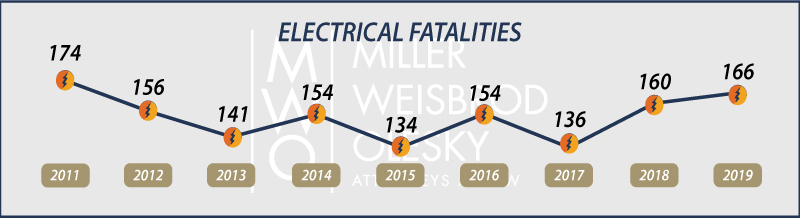
According to the Bureau of Labor and Statistics, 2019 had the most recorded fatal electrical injuries since 2011 with 166. Nonfatal electrical injuries involving days away from work totaled 1,900 in 2019. The construction industry had the highest rate of fatal electrical injuries (0.7 / 100,000) followed by utility (0.4 / 100,000) in 2019.
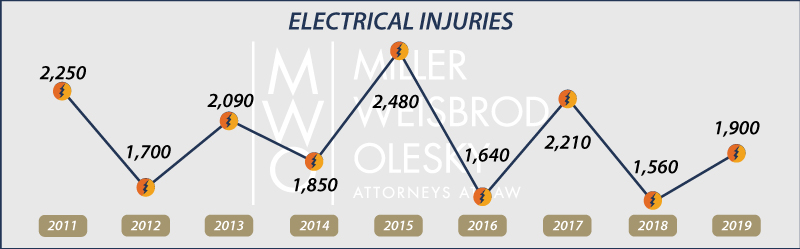
Nearly 1,000 people in the United States suffer fatal injuries due to electrical injuries. 43% of all fatal electrical injuries were in the construction industry.
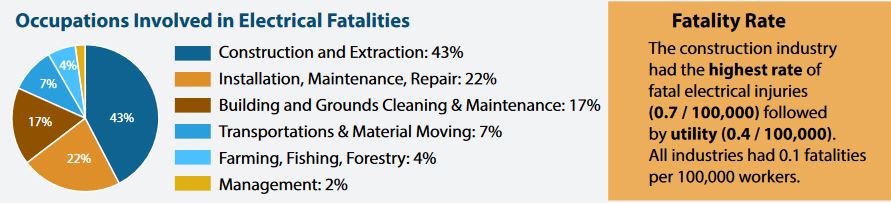
57% of fatalities occurred in service-providing industries while 43 occurred in good producing industries.
Contact with exposure to electrical current accounted for 3% of all fatalities in 2019, maintaining the same percentage as in 2018.
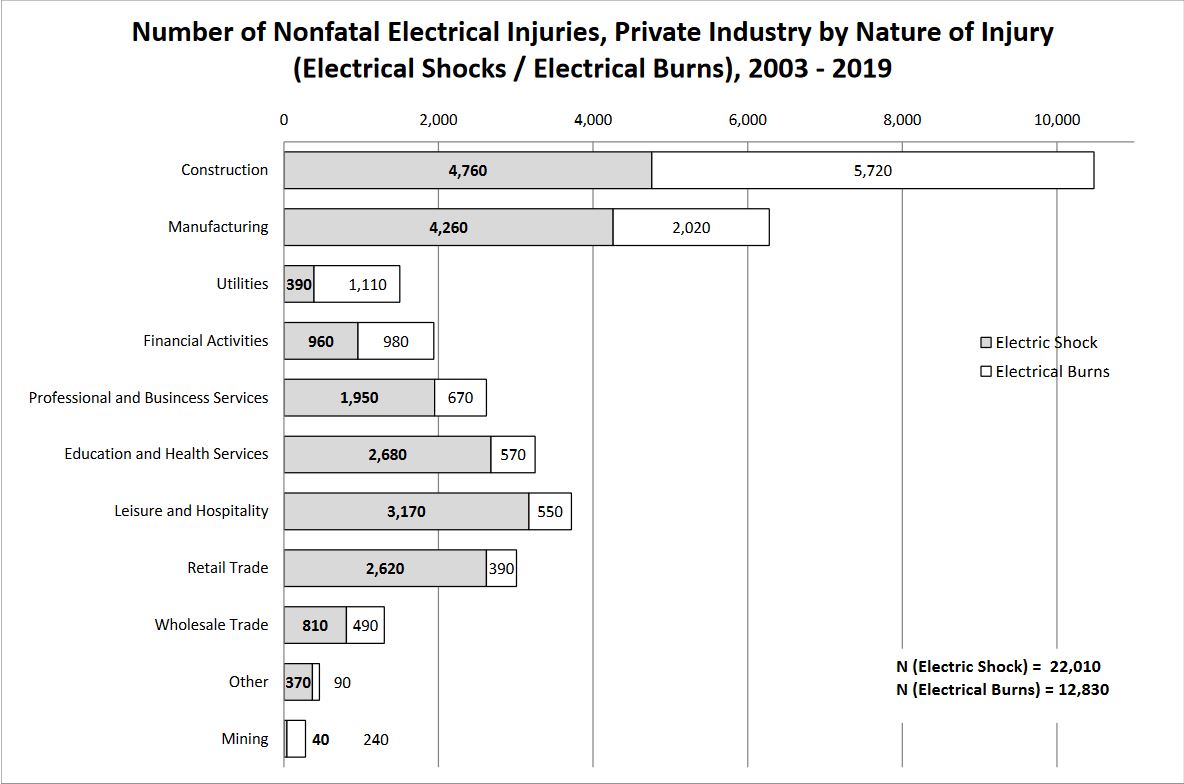
Common Construction Site Electrical Burn Injuries
Fatalities and serious injury because of electrocution most often occur when construction workers or their equipment comes in contact with high-voltage power lines. Contact with overhead power lines in particular cause more fatal electrocutions on construction sites than any other hazard, according to the Occupational Safety and Health Administration (OSHA). Coming in contact with equipment that was not de-energized is the second leading cause of electrocution fatalities.
Electrical Burns
Entrance Wound: High resistance of skin transforms electrical energy into heat, which produces burns around the entrance point
Exit Wound: Current flows through the body from the entrance point, until finally exiting where the body is closest to the ground.
Arc or Flash Burns
Arc Burns occur when electrical energy passes from a high-resistance area to a low-resistance area. No contact is required with an arc burn as the electricity ionizes air particles to complete the circuit.
A Flash Burn is a painful inflammation of the cornea, which is the clear tissue that covers the front of the eye. A flash burn occurs when you are exposed to bright ultraviolet (UV) light. It can be caused by all types of UV light, but welding torches are the most common source.
Thermal Contact Burns
A thermal burn is a type of burn resulting from making contact with heated objects, such as boiling water, steam, hot cooking oil, fire, and hot objects. Burns can also come from flames that arise when an arc flash ignites a worker’s clothing.
Electrical Shock Burn Injuries
An electrical shock may cause burns, or it may leave no visible mark on the skin. In either case, an electrical current passing through the body can cause internal damage, cardiac arrest or other injury. Under certain circumstances, even a small amount of electricity can be fatal.
- Damage to the heart, central nervous system, and or other internal organs caused by contact with high voltage
- Fall injuries due an electric shock can knock a worker off balance
Electrical injuries on construction sites are preventable. The damage caused electrical injuries can result in severe damage. Construction workers who suffer electrical injuries can file a personal injury claim for medical expenses and loss of income. If the accident was caused by negligence on the part of someone other than the employer, the worker may also file a third-party personal injury claim to recover additional damages.
Electrical Burn Injury Risks
- Overhead power lines
- Buried power lines
- Improperly grounded power tools
- Moving trucks and other heavy equipment
- Gas-powered combustion engines
- Working at heights
- Bad weather
- Defective equipment
- Exposed wiring and unfinished electrical systems
- Unsafe premises wiring
Workers may also suffer severe burns if sparks from electrical equipment ignite gas fumes emitted by generators or other combustion engines. Less serious burns may result from getting shocked by power tools that are not properly grounded. However, even a small shock can knock a worker off balance, which can result in serious injuries if the worker falls off a roof, scaffold, or ladder. Workers who get shocked while driving or using tools may also get injured if they lose control of their vehicle or equipment.
July 16, 2021: Lake Conroe, TX
One worker was killed and another suffered non-life-threatening injuries during an industrial accident at the resort at Lake Conroe.
Most Common Electrical Burn Injuries
Burns are the most common type of electrical injury on construction sites, according to OSHA. Other types of common electrical injuries include respiratory arrest, heart attack, muscle spasms, and damage to the central nervous system and other internal organs. Electrical burns, in particular, often cause lasting harm that may not be immediately apparent. Examples of long-term or permanent damage requiring ongoing treatment include the following:
- Scarring and Disfigurement: Hands, head, and feet are the most common contact points for arc burns. Victims may require reconstructive surgery and ongoing physical therapy
- Tissue Damage: Tissue damage is susceptible to infection, potentially leading to the need to amputate limbs
- Psychological trauma: Patients who have suffered serious burns often endure months of painful treatment, which can trigger anxiety and depression
- Impaired Hearing or Lung Damage: Explosions from electrical arcs can create pressure waves capable of damaging the inner ear or causing lungs to collapse
- Damage to Muscles and Ligaments: Electrical shock causes involuntary muscle contractions, which may result in permanent damage
Reflex Sympathetic Dystrophy (RSD) is one type of muscular disorder that can develop as a result of electric shock. Reflex sympathetic dystrophy syndrome (RSD) is a disorder that causes lasting pain, usually in an arm or leg, and it shows up after an injury, stroke, or even heart attack. But the severity of pain is typically worse than the original injury itself. Also known as complex regional pain syndrome (CRPS), RSD occurs when blood vessels contract at an injury site but fail to reopen, causing ongoing feelings of pain and extreme coldness.
Preventing Electrical Burn Injuries
Employers and employees can prevent electrical injuries on construction sites by doing the following:
- De-energize high-voltage lines or post barricades
- Ensure that low-voltage electrical systems are grounded
- Operate electric power tools away from combustion engines or other areas where there may be dust or flammable gas or liquids
- Inspect power cords to ensure they are not frayed or worn
- Provide and learn adequate lockout/tagout systems
Employees must take special precautions regarding power lines, which can act like a magnet and move toward metal objects nearby. Equipment such as cranes, front loaders, and backhoes should never be operated near power lines; neither should workers use metal ladders or scaffolds within 10 feet of power lines.
OSHA requires the use of Ground Fault Circuit Interrupters (GFCI) at construction sites. Workers must be trained in proper use of lockout/tagout procedures to make sure industrial equipment is de-energized when it is undergoing maintenance and not in use. However, this is not always practiced on construction sites, as lockout/tagout regulations are among the most frequently cited OSHA violations.
§1910.335(b), OSHA requires employers to use alerting techniques (safety signs and tags, barricades, and attendants)...to warn and protect employees from hazards which could cause injury due to electric shock, burns or failure of electric equipment parts.
Although these Subpart S electrical provisions do not specifically require that electric equipment be marked to warn qualified persons of arc-flash hazards, §1910.335(b)(1) requires the use of safety signs, safety symbols, or accident prevention tags to warn employees about electrical hazards (e.g., electric-arc-flash hazards) which may endanger them as required by §1910.145.
Experienced Representation for Burn Injury Victims
Miller Weisbrod Olesky is the recognized leader in plaintiffs' personal injury trial law. We have the experience, legal skill and resources to tackle a full range of serious burn and electrocution cases, including:
- Construction site fires and explosions caused by ignition of flammable gasses or aerosols caused by carelessness, improper disposal or faulty electrical installation
- Explosions caused by faulty industrial equipment such as air compressors
- Burns or electrocution caused by electrical contractor or subcontractor negligence
- Fires and electrical injuries caused by violations of National Electrical Association regulations regarding the installation of wires and breaker boxes
It is important to consult an experienced injury lawyer in a burn or electrocution case. The long-term nature of these injuries means that compensation for medical bills, lost wages and pain and suffering may not be enough. There may be future medical expenses for physical therapy, rehabilitation and corrective surgery to consider.
Our team of experienced burn injury attorneys serves the legal needs of burn and electrocution victims. If you need legal advice, caring support, and dedicated representation; please contact our offices today to schedule your free consultation. With locations in Dallas and Houston, we handle cases nationwide, and invite you to call us at (214) 987-0005, or toll free at (888) 987-0005. You may also fill out the form on this page to set up your free initial consultation.
The Leader In Construction Accident Litigation

With a 30-year history heading the Construction Accident Department of Miller Weisbrod Olesky, firm partner Clay Miller has a proven record of holding construction companies accountable and achieving multi-million dollar settlements and court verdicts for his clients.
Clay has handled construction accident cases in all major cities in Texas and numerous smaller counties. In one recent trial, Clay won a construction accident verdict of $26,500,000 for his client who suffered a spinal cord injury after a construction accident fall.
Clay has been consistently listed in Super Lawyers as one of the Best Lawyers in Texas, published in Texas Monthly, for over 15 years.
Clay is a past president of the Dallas Trial Lawyers’ Association and served as Chair of the Advocates for the Texas Trial Lawyer Association where he continues to serve on the board of directions. Clay is also a member of the elite American Board of Trial Advocates (ABOTA) limited to a select group of trial lawyers who have tried to a jury verdict a significant number of cases and who are recognized for their professionalism.
Clay is regularly invited to speak to Trial Lawyer Groups around Dallas, Houston, San Antonio, Austin, and across the state of Texas on the topics of construction accidents, trial tactics in complex construction cases and techniques to investigate and gather evidence in construction accidents, picking a jury in construction accident cases, as well as how to prepare a winning legal and trial strategy in Construction Accident Cases throughout Texas.
Our construction accident legal team includes Josh Birmingham, who is currently on the Dallas Trial Lawyers Board of Directors and served as the president of the Mesquite Bar Association for four years. Josh was named Thomson Reuters | Texas Super Lawyers Rising Star in 2016 and 2017.
We also have on our team Michael Orth, a board certified personal injury trial lawyer who has spent the last decade representing injured Texans and their families. Michael’s success in scores of personal injury cases across federal and state courtrooms has earned him the coveted Board Certification in Personal Injury Trial Law by the Texas Board of Legal Specialization.
Led by a formidable legal team with an extraordinary record of court verdicts and settlements in construction accident cases, Miller Weisbrod Olesky is regularly recognized by the US News and World Report as one of the top injury law firms in the United States.
Miller Weisbrod Olesky
Miller Weisbrod Olesky's Personal Injury Lawyers help individuals and families nationwide pursue real financial recovery after another's negligence causes an accident or medical mistake that results in serious personal injury or wrongful death.
Call our offices today at (888) 987-0005 for experienced assistance in a free consultation.
Useful Links
Testimonials
- Ms. Rosen: Mr. Weisbrod did a wonderful job on my son's case. I only wished that I had come to him sooner.
- A. Springs: Mr. Weisbrod was a delight to work with. His knowledge and memory was exceptional. He treated my case with sensitivity and care and I was always confident and never doubtful that he would win my case.
- D. Garcia: Whether you're in Dallas, Houston, or Austin, across Texas or around the nation, putting Miller Weisbrod on your legal team will push parties to settle.
Locations
★ Dallas
11551 Forest Central Drive, Suite 300
Dallas, TX 75243
★ Houston
12929 Gulf Freeway, Ste 111
Houston, TX 77034