Medical City Weatherford Lawsuits
Medical City Weatherford: Two Babies Brain Injured | Same OB Practice | Less Than Four Weeks Apart

Families Announce Medical Malpractice Lawsuit Against Medical City - Weatherfod, Medical City Healthcare & HCA, Weatherford OB/GYN Associates & Unified Women's Healthcare of Texas; After Catastrophic Birth Outcomes
One Child Survived with Permanent Brain Injury | Second Baby Died at 44 Days Old
News Conference with Holloway and McKinley Families in Attendance
Monday, October 12 at 11:00am in Dallas
Press Conference for Holloway & McKinley Families
News conference announcing two lawsuits filed October 9, 2026, in Dallas County District Court against Medical City Weatherford, its parent companies Medical City Healthcare and HCA, Weatherford OB/GYN Associates and Unified Women’s Healthcare of Texas. The suits involve two babies who suffered brain injuries from oxygen deprivation at birth at the same hospital, 25 days apart. Ryker McKinley died at 44 days old. Laytan Holloway lives severely impaired with permanent brain injury.
Start Time
Monday, Oct. 12, 2026, 11:00 am CT
On Location
Miller Weisbrod Olesky LLP
11551 Forest Central Drive, Suite 300
Dallas, TX 75243
Livestream
YouTube – https://www.youtube.com/live/biW0YdybYyo
In Attendance
- Les Weisbrod, Partner, Miller Weisbrod Olesky. Attorney for both families
- Mariah Sales and Cameron McKinley, parents of Ryker McKinley
- Kellie and Brendan Holloway, parents of Laytan Holloway
Laytan Holloway, Born September 17, 2025
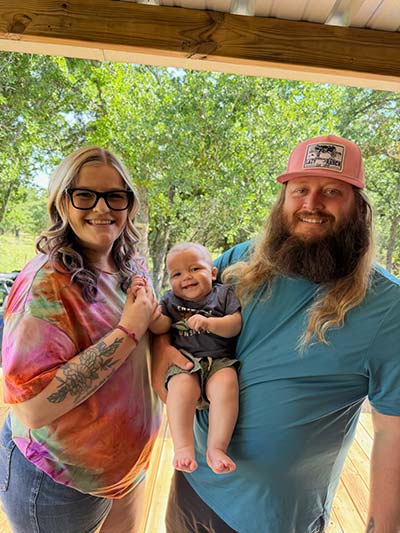
Kellie Holloway, baby Layton Holloway, Brendan Holloway
Image Taken: May 3, 2026
Sept. 16–17, 2025. Kellie Holloway, 27 and pregnant with her first child, arrived at Medical City Weatherford at about 8 p.m. on September 16, 2025 for a scheduled induction due to high blood pressure.
When she was placed on the fetal monitor at 8:41 p.m., the tracing was abnormal — before any induction medication had been given and remained abnormal for hours until Layton was finally delivered by C-section.
The nurses did not call her obstetrician, Dr. Krista Lemley of Weatherford OB/GYN Associates, part of Unified Women’s Healthcare of Texas, until 11:10 p.m., two and a half hours after the fetal monitoring strip began.
A nursing expert says the doctor should have been called to the bedside within 30 minutes. Dr. Lemley ordered a C-section at 11:37 p.m. Laytan was not delivered until 12:45 a.m. — 68 minutes later.
He was born blue and limp and not breathing. No pediatrician was present.
The on-call pediatrician was notified six minutes after his birth and arrived 35 minutes after he was born. In the nursery, Laytan's blood sugar was too low to register; a neonatal expert says it stayed at critically low levels for about two hours and was not stabilized until nearly five hours after birth.
Laytan was transferred to Cook Children's Medical Center in Fort Worth, where he was treated with therapeutic cooling for hypoxic-ischemic encephalopathy (HIE) — brain injury from lack of oxygen — and spent a month in the NICU.
He lives with permanent brain injury and likely cerebral palsy by testing at Cook’s. The Holloway lawsuit also names Cook Children's Medical Center and several of its NICU and hematology providers over his later care.
Ryker McKinley
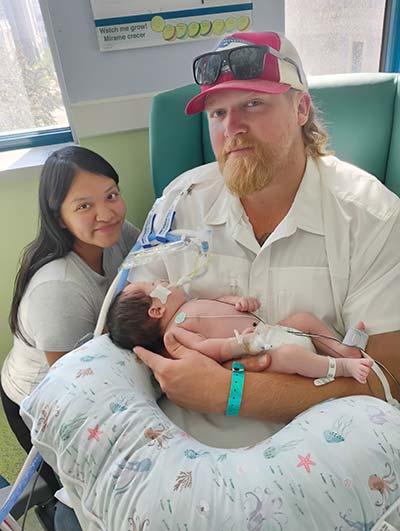
Mariah Sales, Cameron McKinley, baby Ryker McKinley
Image Taken: November 2, 2025
Oct. 12, 2025. Mariah Sales, 30, was admitted to Medical City Weatherford on October 10 for induction of her second baby. Her obstetrician was Dr. Jennifer Moss, also of Weatherford OB/GYN Associates, again part of Unified Women’s Healthcare of Texas.
On October 12, according to the lawsuit and an OB-GYN expert, the fetal heart tracing showed warning signs for more than seven hours, yet nurses repeatedly continued and restarted Pitocin, a labor-inducing drug, contrary to the hospital's own safety checklist. Dr. Moss documented the tracing as normal at three bedside checks.
Dr. Moss repeatedly misinterpreted the fetal monitoring strip for hours during the labor as demonstrated on the strip between 1:00 p.m. and 2:00 p.m. when she was at the bedside. At 4:53 p.m., the baby's heart rate fell even further to 70 and did not recover. Dr. Moss was not at the hospital at 4:53 p.m. when the heart rate dropped.
Nurses first called the pediatrician, Dr. Sandra Rodriguez, at 5:16 p.m. and got no answer. Ryker was delivered by emergency C-section at 5:38 p.m. Ryker was born without a heartbeat and was not breathing. No pediatrician was in the operating room.
The anesthesiologist caring for his mother left her side to intubate him; an X-ray later showed the breathing tube had been misplaced for 28 minutes. The pediatrician arrived at 6:00 p.m. — 22 minutes after birth — and only then was a heartbeat recorded. A neonatal expert says the resuscitation did not follow national Neonatal Resuscitation Program standards, delaying key medication and access to a vein.
Ryker was transferred to Cook Children's, where an MRI showed severe, near-total brain injury. He depended on a ventilator for his entire hospitalization.
On November 25, 2025, at 44 days old, his parents, based on the neonatologist recommendation, made the decision to remove his breathing tube, and he died peacefully with his family.
The McKinley lawsuit alleges that after Laytan Holloway’s injury, hospital nursing leadership made no changes to labor-and-delivery policies, training, or supervision — including training on calling a pediatrician to high-risk deliveries. An OB-GYN expert says that failure amounts to gross negligence.
Lawsuit Alleges The Following
The lawsuits allege, among other things, that Medical City Weatherford and its staff:
- Failed to recognize and report warning signs on fetal heart monitors for hours;
- Continued and restarted Pitocin despite abnormal tracings, contrary to the hospital's own checklist (McKinley);
- Failed to advocate for a timely C-section or use the chain of command when physicians did not act;
- Failed to have a pediatrician or qualified neonatal resuscitation team present for high-risk births;
- Failed to follow Neonatal Resuscitation Program standards in resuscitating Ryker McKinley; and
- Failed to change policies, training, or supervision after Laytan Holloway’s injury.
The McKinley lawsuit also alleges Dr. Moss misread the fetal monitor, allowed unsafe Pitocin use, and failed to perform a timely C-section. The Holloway lawsuit alleges Dr. Lemley failed to deliver Laytan by emergency C-section in time.
Les Weisbrod's Overall Concerns About Both Cases
Dallas attorney Les Weisbrod, partner at Miller Weisbrod Olesky, a nationally recognized medical malpractice attorney and past president of the American Association for Justice (the world's largest trial lawyer association), represents both families.
The suits were filed in Dallas County, where Medical City Healthcare (HCA) regional headquarters and Unified Women’s Healthcare of Texas are located. According to Medical City Weatherford’s website, over 700 babies a year are born there.

Board Certified Birth Injury Malpractice Lawyer - Les Weisbrod
"Medical City Weatherford had a baby severely brain injured by failure to timely act on abnormal fetal monitoring in the Holloway case, and it changed nothing. Twenty-five days later, Ryker McKinley was born without a heartbeat and waited 22 minutes for a pediatrician. That is not an accident. That is a system that chose profits over safety and not to fix itself,” Weisbrod said.
“The allegations and expert reports in these two cases describe failures at the most critical moments of labor, delivery and newborn resuscitation,” Weisbrod said. “Our concern is that nurses were not properly interpreting and escalating dangerous fetal monitoring, the obstetric response lacked the urgency these babies required, and the hospital was not prepared with the appropriate personnel at delivery to perform the resuscitation these newborns needed".
"They should not be delivering babies at Medical City Weatherford if the nurses and obstetricians there are not trained to recognize and timely treat the potentially life-threatening abnormalities on fetal monitoring and do not have qualified physicians and personnel available to resuscitate babies appropriately.”
Timeline - Layton Holloway - (September 16-17, 2025)
| Time | Event |
|---|---|
| ~8:00pm | Kellie Holloway admitted for scheduled induction (gestational hypertension) |
| 8:41pm | Fetal monitor applied; tracing shows minimal variability, no accelerations, late decelerations |
| 10:10-10:37pm | Two failed IV attempts; house supervisor places IV; fluids started |
| 11:10pm | First call to Dr. Lemley — 2.5 hours after monitoring began; she will review and call back |
| 11:37pm | Dr. Lemley calls back and decides on C-section |
| 11:50pm | Dr. Lemley at bedside |
| 12:00am | Nurse notes fetal heart rate variability absent |
| 12:15am | Mother in operating room |
| 12:45am | Laytan born — blue, limp, not breathing; thick meconium |
| 12:51am | Pediatrician Dr. Sandra Rodriguez notified |
| 1:08-1:17am | Blood sugar critically low (<10 mg/dL; 5 mg/dL) |
| ~1:20am | Dr. Rodriguez at bedside — 35 minutes after birth |
| 2:51am | Cook Children's transport team assumes care |
| 5:08am | Blood sugar 28 mg/dL |
| 5:20am | D15 at 18 ml/hr given through central line |
| 7:17am | Arrives at Cook Children's; therapeutic cooling begins |
Timeline - Ryker McKinley - (October 12, 2025)
| Time | Event |
|---|---|
| October 10 | Mariah Sales admitted for induction (proteinuria) |
| 6:15am | Pitocin started on Dr. Moss's order despite an unfavorable Bishop score |
| ~9am onward | Category II tracing with recurrent decelerations; Pitocin continued or restarted repeatedly (per Dr. Mark) |
| 9:52am • 11:33am • 1:54pm | Dr. Moss documents tracing as "Category I" |
| 12:52pm onward | Mother's blood pressure low; not reported to a physician (per Dr. Mark) |
| 4:53pm | Fetal heart rate falls and does not recover |
| 4:57pm | Dr. Moss called; en route to hospital |
| 5:06pm | Scalp electrode placed; Category III tracing |
| 5:16pm | Pediatrician called — no answer, twice |
| 5:17pm | Dr. Moss arrives; vacuum attempt fails |
| 5:21pm | Emergency C-section called; first anesthesiologist says he is not on call |
| 5:38pm | Ryker born; no heartbeat, not breathing; placental abruption found |
| 5:42pm | Anesthesiologist intubates Ryker |
| 5:49pm | First epinephrine, through breathing tube (11 minutes of life) |
| 5:56pm | IV placed; epinephrine by IV (18 minutes of life) |
| 6pm | Dr. Rodriguez arrives — 22 minutes after birth; first heartbeat recorded |
| 6:10pm | X-ray shows breathing tube in wrong airway for 28 minutes |
| 6:55pm | Cook Children's transport team assumes care |
| November 25, 2025 - 4:05pm | Ryker dies after compassionate extubation, age 44 days |
Was Your Child’s Birth Injury Caused By Medical Malpractice?

Parents whose children suffer birth injuries deserve answers as to whether mistakes by the doctors and nurses contributed to the injury. Our top rated birth injury attorneys have represented families across the United States in their time of need after a birth injury.
We use our skills and expertise to obtain for you and your child a medical malpractice settlement that will help provide specialized medical therapy in order to maximize the quality of life and independence of your child throughout their life.
- Were there signs of birth injury or birth complications during the pregnancy, labor, and delivery process, or presence of risk factors, which were either not recognized or properly treated?
- During the labor and delivery, were there clear indications that the baby was suffering from fetal distress, but appropriate actions were not taken by the maternal fetal specialists, obstetrician or nurses?
- Was there a delay in diagnosis of a likely premature birth that led to later complications, including brain injury?
- Did the medical team fail to order a series of tests to diagnose this birth complication in a timely manner?
- Was the decision to perform a cesarean delivery delayed leading to birth trauma during vaginal delivery or labor?
- Did the neonatal resuscitation team fail to quickly begin important breathing support?
- Should brain cooling (also called “hypothermia therapy”) have been provided to your baby, but the doctors and nurses failed to perform the appropriate tests or ignored the results of the tests?
Our birth injury attorneys have recovered millions of dollars in settlements for families of children that have suffered a birth injury. At no point in our legal intake process will we ask you to pay anything. The medical review of your case and the consultation are free. We only receive payment when you do, no matter how long or tough your case is.
What is the Statute of Limitations in a Birth Injury Lawsuit?

A statute of limitations (SOL) is a law that sets a time limit on how long an injured person has to file a lawsuit after an accident. It is essential to understand that statutes of limitations vary based on the case and the state where you file. For instance, the deadline for birth injury claims is typically different from other claims, such as injury to private property.
Generally, the clock starts ticking on the date the injury occurred. However, there are exceptions to this rule. In some cases, the statute of limitations starts when a person discovers or reasonably should have discovered an injury.
If you file your case outside of the statute of limitations, the court will typically dismiss it. This means you will not be eligible to recover compensation for you or your child’s injuries. Determining when a statute of limitations begins on your case can be tricky. If you are considering pursuing compensation for a birth injury, contact an attorney as soon as possible.
How Can Our Birth Injury Attorneys Help?
Birth injuries are not always preventable, but medical errors are. It takes an expert review of the facts of your birth to determine whether medical professionals mismanaged your child’s delivery.
Our team of Nationally Recognized Birth Injury Lawyers, nurses and paraprofessionals works to answer these questions and seek compensation. We use our detailed medical negligence case review process to assess your potential birth injury case.
We start by learning more about your child by gathering records to determine what happened during and after your delivery. This includes a detailed review of the treatment doctors provided or failed to provide after labor. We also take into account your child’s status of meeting or missing developmental milestones.
We will call in skilled medical experts who review your records and provide insight into where medical professionals went wrong. If we feel medical negligence caused or worsened your child’s injuries, we meet with you to discuss further.
At no point in our legal intake process will we ask you to pay anything. The medical review of your case and the consultation are free. We only receive payment once you do. The sooner you reach out, the sooner we can investigate your case and gather the evidence to support your claim.
We work on a contingency fee basis, meaning you will not pay any legal fees until we win your case. We do not purse any medical malpractice cases unless we fully believe we can win. Contact us today to schedule your free consultation by calling our toll-free line at (888) 987-0005. You can also reach us by filling out our online request form.
Footnotes: Glossary of Terms
Given to a newborn whose heart is not beating, or is beating too slow, despite breathing support.
A 0–10 score of a newborn's heart rate, breathing, muscle tone, reflexes and color at 1, 5 and 10 minutes after birth. Ryker scored 0 at every check through 20 minutes.
A baby's heart rate falling too low during labor; a prolonged drop signals the baby is not getting enough oxygen.
The national system for reading a fetal heart monitor. Category I is normal; II is indeterminate and needs action; III is abnormal and calls for prompt delivery.
The process nurses must use to go over a physician's head when patient safety requires it.
A temporary drop in the baby's heart rate. Late decelerations, which follow contractions, suggest the baby is not getting enough oxygen from the placenta.
A small wire placed on the baby's scalp to read the heart rate more accurately than an external monitor.
Dangerously low blood sugar; in a newborn with brain injury it can worsen damage to the brain.
Placing a breathing tube in the windpipe.
Texas's basic level of newborn care — a well-baby nursery, not a neonatal intensive care unit.
The American Academy of Pediatrics' national standard for reviving newborns who are not breathing or have no heartbeat.
A drug used to start or strengthen contractions. Hospitals have checklists for when it must be stopped.
The placenta separating from the uterine wall before birth, cutting off the baby's oxygen supply.
Lowering a newborn's body temperature for 72 hours to limit brain damage after oxygen deprivation.
A line placed in the umbilical cord vein; the NRP standard route for emergency medicine in a newborn.
Miller Weisbrod Olesky
Miller Weisbrod Olesky's Personal Injury Lawyers help individuals and families nationwide pursue real financial recovery after another's negligence causes an accident or medical mistake that results in serious personal injury or wrongful death.
Call our offices today at (888) 987-0005 for experienced assistance in a free consultation.
Useful Links
Testimonials
- Ms. Rosen: Mr. Weisbrod did a wonderful job on my son's case. I only wished that I had come to him sooner.
- A. Springs: Mr. Weisbrod was a delight to work with. His knowledge and memory was exceptional. He treated my case with sensitivity and care and I was always confident and never doubtful that he would win my case.
- D. Garcia: Whether you're in Dallas, Houston, or Austin, across Texas or around the nation, putting Miller Weisbrod on your legal team will push parties to settle.
Locations
★ Dallas
11551 Forest Central Drive, Suite 300
Dallas, TX 75243
★ Houston
12929 Gulf Freeway, Ste 111
Houston, TX 77034